Sunday, March 30, 2014

Gestures - Week 6

Good ol´ Gestures


Gestures are movements of the face and hands that express diverse feelings as well as an emotional status. We usually smile when w

e are happy or when something is funny that expression ladies and gentlemen’s is known as a gesture.
As many other things in communication we can separate gestures in two types.

Type of gestures:
There are 2 types of gestures; acquire and innate ones.


  • Innate :  Are the natural type of gestures , this type of gesture are the ones that we share all around the world, all humans without the country, region or culture we belong. Humans usually react the same way to stimulus like happiness, fear , surprise and rage.


    We raise our eyebrows and we shape our moth as an "O" to express surprise.

    We wrinkle our space between eyebrows and we tightly close our eyes when we feel pain.

    We frown our forehead when something we are worried.


  • Acquire: This type of gestures are learned from the culture or region we belong, this type of gesture are usually learned from time to time. This type of gestures are used depending on the context of the situation.

    We learn to clap our hands when we feel joy after a show or performance.

    Here in the west side of the world we are use to stretch hands when we meet someone

    In the east side of the world are cultures use to bow when they meet someone new.

Another type of gestures:

Emblematic: They are signals shown deliberately. Their meaning is very clear for example showing thumbs up when everything is alright.


Illustrative: They are shown during the verbal communication and they are used to illustrate what we are saying.


Momentary gestures: They show some personal feeling during moments for example celebrating a victory in a competition.


Adaptation gestures: Created by people when they don’t want to show emotions.

Usually we dont get this type of gesture right


Where you aware of all the types of gestures we do? I believe that gestures can tell us many things about someone. I hope you enjoyed this post!

I’m Daniel, have a great weekend.

Friday, March 28, 2014

Non-verbal Communication - Week 5

Non-Verbal Communication


From previous post in this blog I have mentioned the term non-verbal communication and I asked myself today ¿Is everyone aware of what is non-verbal communication?. Don´t get me wrong readers non-verbal communication defines itself pretty well with his own tittle, but i will like to take a deeper look at this them so we  can be in the same context.
So no waiting more time this post will talk about Non-verbal communication.

As humans we like to communicate what we have to say , we have the necessity to deliver a message to share thoughts. In order to communicate and express our ideas better we used different languages and one of these languages is the Non-verbal communication.

The non-verbal language is in a kind of way imitative , innate and learned. The fundamental of non-verbal communication comes from different parts of the body working together to send a message.

When you speak with someone only a small part of the message they´re sending is obtained from their words, its been estimated that between a 60 and 70% of what we perceive and communicate is by non-verbal communication channel.

In order to develop our ability to communicate with someone on a interpersonal lever is to understand the aspects of non-verbal communication.
Everyone communicates not only with words but with gestures, postures, tone -volume of voice etc..

Non-verbal communication is so important that even there´s study field specialize in non-verbal communication.

Kinesiology: Study gestures and body movements from the body.


Paralinguistic: Study the behavior of non-verbal communication expressed in the voice.


Proxemics: Study the behavior of non-verbal communication through personal space.


¿Would you be interested in study some of these science? If you are interested in these topics of non-verbal communication this blog will spend the next post talking about the details and the components of this amazing way to communicate.


Hope you enjoy the reading, I´m Daniel thank you!

How to detect lies - Week 4

How to detect lies


One of the most attractive topics on the non-verbal communication is the process to detect lies.
¿Is there any formula that allows us detecting lies?
According to a scientific investigation by Dr. Paul Ekman and Allan Pease have planted 7 steps to identify when someone is hiding truth in a conversation.

1.- Just Ask the question
When you ask a question to someone that you believe is lying their reaction is to repeat the entire question as an answer or make a pause then answer like they haven’t listen or understand the question properly.
Usually when someone is lying the pauses between words increase and their response is another question.


2.- The itchy mouth
Gestures can be a double edge blade , sometimes can support arguments and sometimes can reveal the real tough on a argument.
When someone is lying they usually drag the fingers or entire hand to cover their lips and mouth is a natural gesture that is used by kids to reveal when someone is lying or saying something that is not truth.


3.- Sweaty forehead
¿Have you ever notice how when someone feels threaten his or her whole body starts to sweat? Even when their body was complete dry second after, now you see them kind of sweaty this is product of nervousness.

This is a biological fact. When we feel pressure or we feel danger, our body will automatically start sweating, to prepare the body for any physiological activity before it happens to regulate the body temperature. 
How to relate this with lying? Well when someone is lying usually they don’t use all the muscle in their face, as consequence of faking all the movements to sound natural the body takes this as an alert of danger and starts sweating at this moment the sweaty forehead starts their role.


4.- Steady body
We can compare lying to play basketball ¿Can you imagine trying to shot the hoop and every time you take the shot you look away from the basket? Not probably; you’re always looking at your goal to see if you accomplished it or not.  What we do is we maintain our glance straight to the ball trajectory to the basket.

When we lie we are throwing a "ball" that we hope our "basket" (listener)  catch , in some way to confirm that they put the guard down and believe us. 

But our eyes are not the only part of our body that keep steady when you’re lying or someone is lying, The hands move less when someone is telling a lie.


5.- The relief of retreat.
The last tip to catch a liar is when the conversation is over.  When you interrogate someone the person is always tense and you can have two endings.
A) They feel attacked and soon as the conversation is over they claim your lack of trust in them. A counterattack for questioning and having doubt.
B) Or they don’t reply anything and their body relaxes for seconds after the conversation is over.

In other words a person that is lying feels guilty and when they stop lying they feel relief.

A honest person is always cooperating ready to explain their self and when you’re questioning someone that is honest they usually will find it offensive and will counterattack after the conversation. A liar in the other hand knows that is lying and is a relief to stop faking information. 


Well there you have it tips to detect liars. Everyone lies and is a human habit, to hide or fake information is part of our daily life and this is part of the process communication. ¿Do you know any other detecting lie method? Feel free to share it


I’m Daniel, thanks for reading!


Thursday, March 27, 2014

6 styles of communication - Week 3

6 styles of communication


Styles can go further than looks, communication can have their own styles.
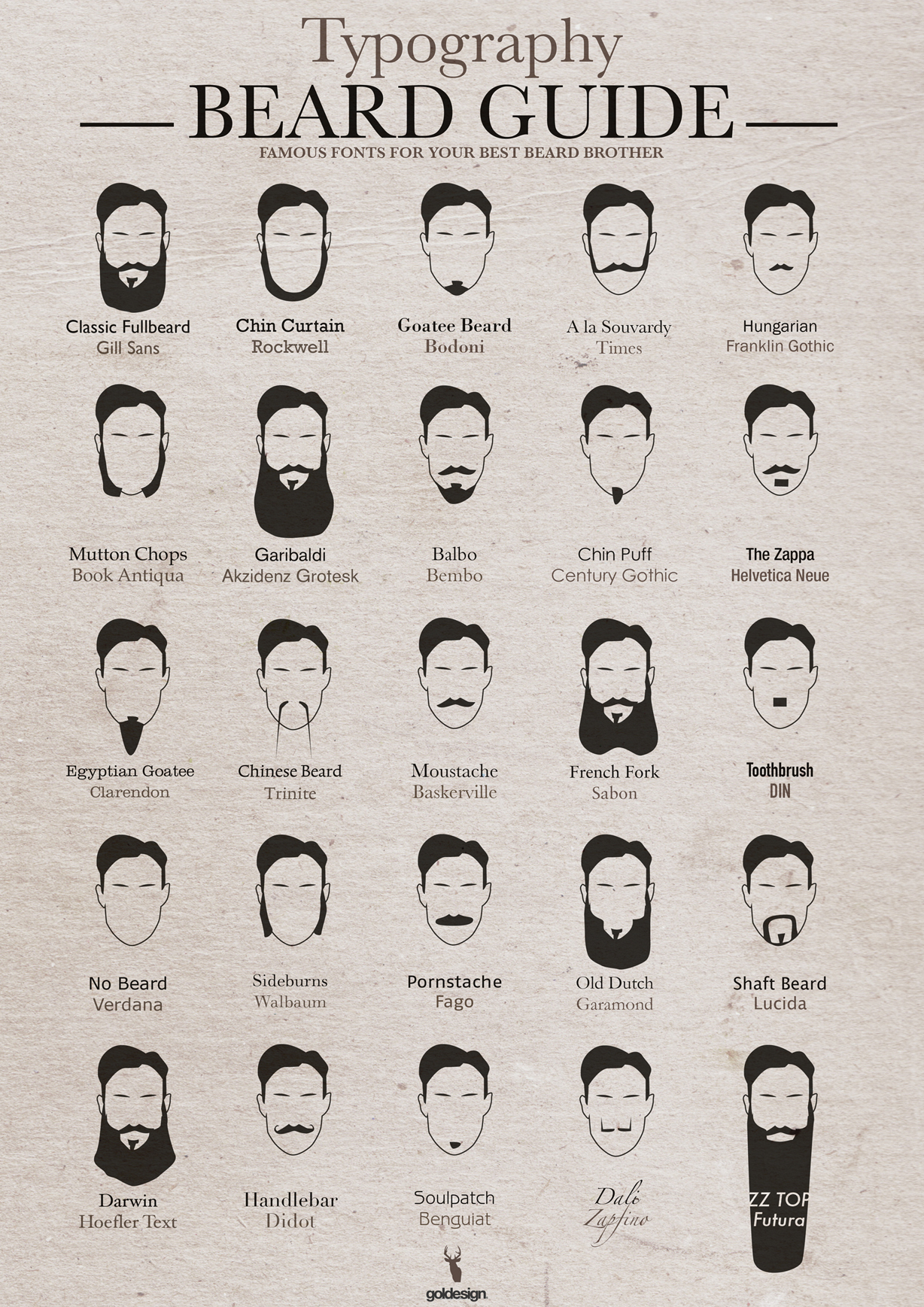
We have heard the word ¨style¨. A word used to describe a group of specific characteristics for doing things. For example style can be related with appearance ; Hairstyle, beard style, clothing style, etc... but style goes further than that.

If we search in a dictionary for the definition of Style we would found: ¨The manner in which something is expressed or performed, considered as separate from its intrinsic content, meaning, etc¨

So style can be related with communication? Of course and today I'm going to present you the 6 styles of communication. Its important to know the characteristics of each style and to understand why is so  important to recognize these styles during an interaction.

Styles of communication can be performed for different situations, the context of the situation will decide which style to use. Is almost the same as Clothing style, you choose your clothing style based on what are you going to do if you're going to a Job interview you will choose a more professional style, if you're going to a party maybe you will go with the trend in a more fashion style , and if you're going to perform some work outdoors or do exercise you will chose a specific style of clothing to do the activities. 

If you can control communication style, you can control the outcome of most interactions. But remember that each person expects the other to communicate exactly as he does. When these expectations are not met, conflict exists.

There are six styles of communication - Noble, Socratic, Reflective, Magistrate, Candidate, and Senator.

Noble : ¨Straight to the point¨
Don't feel bad when someone doesn't want to drift outside of the topic of conversation. Usually a Noble type likes to keep the conversation to business , no side-chats, no drifts, ONLY BUSINESS.

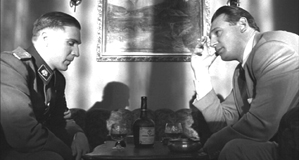
Imagine Clint Eastwood type of style.


Socratic: ¿Are we sure we´re done here?
Socratic type of communication bring the question to the table, every little detail needs to be addressed in this type of communication. If there´s something that Socratic style love are questions.


Can you spot the Socratic?


Reflective: I know we are here to discuss an urgent business issue, but ¿How was everyone weekend?
Do you  have that co-worker that it doesn't matter how bad the situations are in the office, he will prefer to discuss you're weekend rather than the real problem. A reflective person sees the personal relationship with co-workers more important that the tangible results of a conversation. They will tell you everything you want to listen.

And then He said is over , can you believe that the potato salad was over I had an awful weekend.

Magistrate: I would like to have everyone attention please.
A true leader who search the answer in a honest exchange of opinions and information and analysis of details. During the meeting you will see them as heroes but try to discuss a problem without an audience with them, they know how to talk to masses but no to individuals.

I prepare a speech for this occasion, everyone listen because I don't have time later. 


Candidate: Would you like a cup of coffee? Take your time I'm listening.
Patience a candidate most wonderful weapon is their patience, they sit and listen. Like a mother they offer you their attention and they really believe that talking can resolve any problem. A soft spoken storyteller that want people to like him.


Don't worry everything will be alright, another cup? Please continue
Senator:  I came , I see and I conquer.
This here is the most difficult style to dominate, for a senator communication is only a strategy for success. A conqueror who thinks , listens and control any situation.


Well there you have it the 6 styles of communication ¿Wich one do you consider you personal style of communication ?

I´m Daniel, Thanks for reading

Communication is a Process - Week 2

Communication Process


To really understand the communication process we need to pay attention not only to the message sent. One of the first "taboo¨ we need to break is that communication process involves only 2 people and that having a conversation is the only way to communicate.
In the image above we can appreciate two man communicating , this communication process is presented in a diagram form, the interesting part of this diagram is how both person during the conversation don't send a message in a linear way, the message is met at the middle of the process as consequence of the people words and attitudes they create an atmosphere that both man during the communication process receives-decoy-respond.

The communication atmosphere 


We have learned that communication involves the complete behavior of one person and that this behavior can be perceive by the people around him. The communication process can start from a posture and will not finish until there´s no one around to perceive this messages. 

We can easily say that the communication process  involves all the human senses.


Have you ever notice someones emotional status from his communication atmosphere? Are you agree that people can communicate by the smell sense? Whats is your opinion on this blog post?

I´m Daniel , thanks for reading.

Communication Journal 1: The way of a highly effective NEW Communicator

*I decide to relate my Journal  to the weekly posts on this blog, so if we go back & take a look to the first post I made: ¨5 habits of highly Effective Communicators.¨ I will talk about  my journey to become a Highly Effective Communicator.

Its been said that practice makes perfection, and this rule of life will not be the exception to this occasion, becoming a Highly effective communicator involves much more than words; NOT trying to sound cheesy but being a highly effective communicator is a way of life!
You need to work in your attitude, your skills, your language , your grammar , even your voice tone and much more things. Making a comparison becoming a Highly effective communicator is almost like training to become a ninja.
I consider myself a effective communicator but I never consider myself as a highly effective one, and we should define what´s the difference between a highly effective and a effective communicator.

Here we go comparison number 2: Lets picture a effective communicator as a Fighter a professional one for example a boxer. Box is a highly recognize sport around the world and we know that this type of fighters (boxers) will stand out in any fight because of his style, rhythm and strength to throw punches. But a highly  effective communicator is a Mixed martial Arts fighter, both the boxer and the MMA fighter are athletes that could stand out in a fight , but of course a Boxer is only prepared to fight while standing up, an MMA fighter can take the fight to the ground and can find different ways to win. What I'm trying to say is that a HIGHLY effective communicator is prepared for any situation and that he´s package with a lot of tools to confront obstacles.

Today I decide to pass from a boxer to a MMA fighter, and my training camp was the workplace. My coach: The 5 habits of a highly effective communicator.

I have the habit to send a lot of emails in my work. I always tough that sending emails it was a way to save time. My coach told me to send less emails and to start  going to conversate about different issues in the workplace face-to-face to my boss. The result was positive not only the problems in the workplace were resolved faster but the relationship with my boss is improving everyday. Now we don't always talk about work but sometimes about hobbies and personal interest. A highly effective communicator can resolve problems and take some time to have a good conversation.

Another thing that changed during my way to become a highly effective communicator were my reports, my work reports were stocked with information. This type of report bring me confidence before a meeting. Again my wise coach told me to star making my report less stocked of information and to focus my report in the important points.  It looks like the less information displayed in the report the less question generates to my supervisors.

I'm not a highly effective communicator right now but I'm glad that I'm starting with something. Follow this journal to see my improvement during time. If I can become a highly effective communicator anyone can. I invite you to start your own journey to become a highly effective communicator.

My name is Daniel Mier, thanks for reading!


Wednesday, February 12, 2014

5 habits of Highly Effective Communicators - Week 1

Effective Communicators


Have you ever wonder what it takes to be an Effective communicator. Trough our live we met people that have this incredible capability to have a conversation and security to talk in front of anyone. In this Week 1 Informational Blog I will share with you the 5 Habits of Highly Effective Communicators.

To start  we should define the main goal of communication; The idea of communication  is to send a message. An artist for example is a great communicator but not an effective one... Why? because an artist can send us a message from different channels but the message is not clear for everyone. So then what is an effective communicator? An effective communicator is the one that communicate a message and is always clear and understandable for the people he communicates with.
So if your goal is to have a great leadership and communication I will recommend you to follow the next habits of effective communicators.


Habit 1: Mind the say-do gap.
This habit is all about to take care of what you say. If you want to be recognized as a trust full person , you need to match your words with your actions.
 A great leader is like a prophet, people will gain confidence of your words when the things you say actually become true.
The main advice is to remain silent until you're certain that your actions will ring true.


Habit 2: Make the complex simple.
This habit is really simple, try to make all the information simple for the people you're communicating with. Follow the quote "Less is more"

Habit 3: Find your own voice.Do not try to sound different, people perceive what is real and what is fake, whenever you're talking with someone make sure you sound like yourself, don't force big words. Try to use a language that remind simple and eloquent.

Habit 4: Be visible.Communication trough memo's, e-mails and phone's are real effective ways to communicate when it comes to save time, but don't hide behind a desk or a computer to communicate with others. In this era of time is really appreciate when you invest some time to communicate face-to-face. People will notice you as someone  who cares.

Habit 5: Listen with your eyes as well as your ears.
Its been said that communication does not start with the mouth and neither does end with words. A conversation is determined by a number of non-verbal communication skills. When you talk with someone stop and listen , put all of your attention to what they are saying.

So there you have it the 5 habits of a highly effective communicator, I really hope you enjoyed this post, leave a comment if you liked it , hated why or why not.
I will leave the link of the article down below for people who will like to see this habits more detailed.

 I'm Daniel Mier , thanks for reading.

Source Material: Forbes- 5 Habits